
A token with 500,000 Twitter followers. A trending hashtag. A "community vote" that passed with 99% approval. Six weeks later, the anonymous team drained the liquidity pool and vanished. The community had voted. The community had not researched. Those are very different activities, and the price of confusing them was everything the community put in.
"Do your own research" is crypto's most repeated advice and its least explained process. In practice, most "research" is sentiment-checking: reading Discord, watching YouTube, gauging whether the community is bullish. That's marketing consumption. It is not analysis.
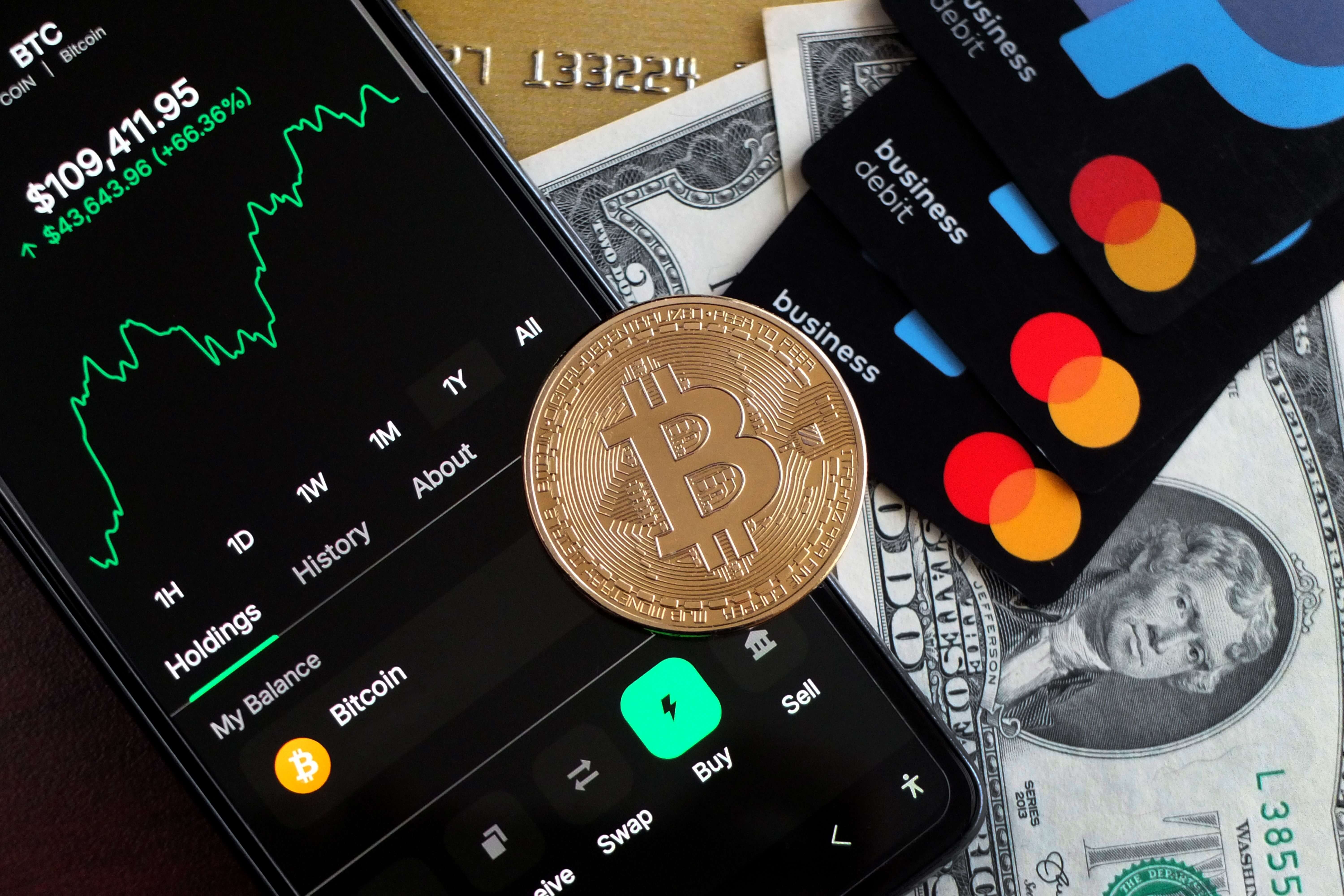
You can tell which kind of research someone did before you ever read their notes, and one of the tells is the funding step. Someone who has worked through the problem statement, the tokenomics and the on-chain evidence gets to the purchase quietly - at a size decided in advance, on a date already on the calendar, through a platform that made them confirm who they are. Being able to buy Ethereum with credit card in ninety seconds on a licensed venue is a strange thing to brag about and a perfectly decent piece of evidence to collect: somebody with compliance obligations and a fraud team looked at that asset and judged their own name worth putting next to it, and the order book is deep enough that a card charge clears at the quoted price instead of moving it. That is not a thesis. It says nothing about vesting schedules, and a venue will happily list a coin nobody has heard of for reasons that have nothing to do with the question you're asking. The rail also costs money - a funding fee stacked on an entry you were already going to pay is a poor trade for a position meant to survive three years. But watch who is doing the buying. Calm, planned, verified, sized in advance is the posture of a person who researched. A 2am deposit into whatever venue would still take the money, in an amount chosen by how the Discord felt, is the same activity confessed instead. More often than anyone wants to admit, the purchase method is a summary of the process that produced it.
Real token research is a structured process across six domains: the problem being solved, the team and governance, the tokenomics, the technology, the competitive landscape, and the on-chain evidence. Community sentiment is one input among many - and frankly, it's often the least reliable one. Here's why hype-based research fails, the six domains with the specific questions that matter, how to weight your findings, and the red flags that should end the process on the spot.
Why Hype-Based Research Fails
The adversarial environment
Crypto is a market where projects pay for hype. Influencer deals, bot armies, coordinated shilling, fake engagement - this is industrialized now, with rate cards. The signals that feel like "community consensus" are frequently purchased. Your job as a researcher is separating organic interest from manufactured noise, and the manufacturing has gotten very good.
The reflexivity trap
In crypto, hype creates price (temporarily), which validates the hype, which attracts more buyers - until it doesn't. This reflexive loop means "everyone is talking about it" is evidence of marketing effectiveness. Not of underlying value. Those two things correlate beautifully, right up until the moment they don't.
The survivorship illusion
We hear about the projects that pumped. We never hear about the thousands that launched with similar hype, similar followers, similar Discords - and went to zero. So start from the base rate: the vast majority of tokens fail. Research begins from that prior, not from the exception you saw on someone's profit screenshot.
Domain One: The Problem and the Solution
The "so what?" test
What problem does this project solve? State it in one sentence without using the words "blockchain," "decentralized," or "revolutionary." If the sentence collapses without the buzzwords, so does the thesis. And ask whether the problem is even real - many projects solve problems that don't exist, or that existing tools solve better, cheaper, and without a token.
The "why a token?" test
Does the project actually need a token, or is the token a fundraising mechanism wearing a utility costume? Plenty of projects could function identically without one. The token exists to raise capital and generate speculative interest - which is a fine thing to know before you become the exit liquidity.
The "why now?" test
Why hasn't this been built before? What changed - technology, regulation, market conditions - that makes it viable now? If the answer is "nobody thought of it," be skeptical. The space is brutally crowded, and genuinely novel ideas are rare.
The "who pays?" test
Who is the customer, and what are they paying for? If the honest answer is "token holders" or "future users," the business model is circular. Sustainable projects have a legible value flow: users pay for a service, and that payment ultimately supports the token's value.
Domain Two: Team and Governance
The identity spectrum
Fully doxxed teams - real names, verifiable history - are the gold standard, though not a guarantee of anything except accountability. Pseudonymous with reputation can be acceptable if the track record is long and verifiable. Fully anonymous, especially for a project holding user funds, is a significant red flag. You're being asked to trust people who have arranged, deliberately, to be untraceable if things go wrong.
Track record verification
Have team members actually shipped products before? Not "advised," not "been involved in" - shipped. Check GitHub contributions, previous projects, employment history where you can verify it. And be suspicious of advisor lists: advisors often lend their name for tokens with near-zero involvement. An impressive advisor page is decoration, not competence.
Governance structure
Who controls the treasury? Who can upgrade contracts? Who can mint new tokens? "Community governance" often means the founding team holds enough tokens to win every vote - check the distribution before believing the decentralization story. And look at the multisig: how many signatures does treasury access require, and whose are they?
The rug pull indicators
Anonymous team + large token allocation + unlocked liquidity + no vesting = maximum rug pull risk. Any single factor is concerning. The combination is a dealbreaker, full stop.
Domain Three: Tokenomics - The Economic Design
Supply mechanics
Total supply, circulating supply, emission schedule: how many tokens exist now, and how many will exist in one, five, ten years? What's the inflation rate - high emissions dilute existing holders steadily and silently. And if there's a burn mechanism, is it meaningful relative to supply, or is it a rounding error with good PR?
Distribution analysis
What percentage sits with the team, investors, foundation, and community? When do team and investor tokens unlock? Large unlocks create predictable sell pressure - the date is published, everyone can see it, and the price often knows it. And concentration: what percentage of supply do the top ten wallets hold? High concentration means manipulation risk and governance capture, whatever the marketing says.
Value accrual
How does the token capture value if the project succeeds? Fee sharing, buybacks, staking rewards, governance rights, burn-from-revenue - there are legitimate mechanisms. But a token with no value accrual mechanism is a speculation on future speculation. That works. Until it doesn't.
The "exit liquidity" question
Who buys this token from you in the future, and why? Sit with that question. If the only answer is "new investors," the project is structurally dependent on continuous inflow - which is the definition of an unsustainable model, no matter how it's branded.
Utility vs. speculation
Is the token used for something - paying fees, accessing services, staking for security - or is it primarily a chip for betting? Utility tokens with real usage have a demand floor. Purely speculative tokens have no floor at all, and falling without a floor is an experience you don't want to fund.
Domain Four: Technology and Security
Code quality and audit status
Has the code been audited by reputable firms? How many audits, and were critical findings actually resolved - or just acknowledged? An audit isn't a guarantee; it's a signal the team invested in security review. Is the code open source? Closed-source projects ask you to trust both the team's competence and its honesty, blind.
Smart contract risk
Are the contracts upgradeable? Upgradeability fixes bugs - and can also introduce malicious code after everyone's money is inside. Who holds the admin keys, and what can they do? Freeze funds? Mint tokens? Change parameters? These are knowable facts. Most buyers never ask.
Technical architecture
Is the project building on established infrastructure or launching its own chain? New chains stack additional risks: consensus security, validator set size, bridge vulnerabilities. And cross-chain bridges deserve special mention - they're among the most exploited components in crypto, and projects relying on them inherit every bit of that risk.
The vaporware test
Is there a working product, or only a whitepaper and a roadmap? Test it yourself: use the dApp, try the protocol, feel the user experience. A polished website is not a product. A working product with rough edges is far more credible than a beautiful pitch deck with no code behind it.
Domain Five: Competitive Landscape
Direct competitors
Who else solves this problem, and what are their advantages - team, funding, network effects, first-mover position? In crypto, being "better" often matters less than being first or better funded. Liquidity attracts liquidity. Users attract users. The technically superior project loses to the entrenched one with depressing regularity.
The moat question
What stops a competitor from copying the code and launching a better version? Most crypto code is open source - cloning is a feature of the ecosystem, not a bug. Real moats in this space are liquidity depth, developer community, brand trust, regulatory relationships, and ecosystem integrations. "Our technology is better" is rarely a moat. Technology here commoditizes at speed.
Market size realism
Is the total addressable market as big as claimed? Projects routinely inflate TAM by conflating adjacent markets. A project targeting a $10B market while carrying a $1B valuation is pricing in 10% market share. Given the competition you just mapped - is that realistic? Or is it arithmetic optimism?
Domain Six: On-Chain Evidence
What the blockchain reveals
On-chain data is the "show me, don't tell me" layer - it reveals what the marketing doesn't. Key metrics: active addresses, transaction volume, total value locked, revenue, developer activity. This is the project's actual pulse, measured in public.
Usage vs. speculation
Are people using the protocol, or just trading the token? High trading volume paired with low on-chain activity is a red flag the size of a billboard. And treat TVL carefully - it's often denominated in the project's own token, so a rising token price "grows" TVL without a single new user arriving.
Developer activity
GitHub commits, pull requests, contributor counts: is the codebase alive and improving? A project with declining developer activity and rising marketing spend is telling you its priorities, plainly, in public. Believe it.
Where to find the data
Block explorers, DeFi analytics platforms, and on-chain data providers offer free dashboards for most major projects. Cross-reference at least two sources - single-source data can be manipulated or misreported, sometimes even accidentally.
The Research Process: Putting It Together
The scoring framework
Rate each domain on a simple 1-5 scale, with notes on what you actually found. Any domain scoring a 1 - critical failure - is a dealbreaker regardless of the total. Weight the domains by your own strategy: a long-term holder weights tokenomics and team heavily; a short-term trader weights liquidity and narrative.
The time-box rule
Set a research budget - four to six hours per project is reasonable - and stick to it. Diminishing returns arrive fast. And if you can't find the information you need within the budget, that's a finding in itself. Opacity is a risk factor.
The write-up
Summarize everything on one page: thesis, key risks, score, decision. The act of writing forces clarity - if you can't articulate the thesis in plain sentences, you don't have one. You have a feeling with a ticker symbol.
The peer check
Share your research with someone who disagrees with you, or at minimum someone with no money in the project. Confirmation bias is the researcher's greatest enemy. A skeptical reader is the cheapest antidote ever sold.
Red Flags That End the Research
Stop immediately - no score, no second look - if you find:
Anonymous team plus large unlocked token allocation plus no vesting
Guaranteed or "risk-free" returns anywhere in the marketing
Pressure to buy quickly ("limited time," "whitelist closing," "price going up")
No working product after significant time or funding
Token supply concentrated in a handful of wallets
A community that attacks or censors critical questions
A roadmap promising everything - partnerships, listings, launches - with no specifics or dates
A project that can't explain how it makes money without referencing token price appreciation
Conclusion
The arc, compressed: hype is manufactured. Real research spans six domains. On-chain data reveals what marketing conceals. Red flags end the process. A structured write-up forces clarity.
And the core insight is humbler than most crypto advice: the goal of research isn't finding the perfect project. It's avoiding the catastrophic ones. In a market where most tokens fail, survival is the first form of alpha.
Try this: take the last token you bought - or almost bought - and run it through the six domains retroactively. Count the questions you couldn't answer. Let that number inform your next position size.
In crypto, the difference between research and rationalization is a structured process you completed before you wanted the answer to be "buy."