




or most of Bitcoin’s history, the dollar has acted as the familiar measuring stick. Market charts quote BTC/USD, portfolio dashboards translate holdings into fiat, and everyday conversations tend to ask what a bitcoin is “worth” in dollars. That convention remains useful, but a parallel habit is becoming more visible: products and services, while increasingly adopting crypto, are beginning to express value directly in bitcoin.
In 2026, this idea is increasingly relevant because bitcoin is supporting a broader range of payment, financial, entertainment, and digital products. As those products become more native to the asset itself, denominating value in BTC can make the experience more internally consistent.
Bitcoin Gaming Shows What BTC-Native Value Looks Like
In the gaming industry, Bitcoin poker, as one of the most popular games offered by online gambling sites, is one clear example of a product where bitcoin can function as more than a payment method. Poker already depends on a closed system of measurable values: buy-ins, blinds, chip stacks, bets, pots, tournament entries, and payouts. When those values are expressed directly in BTC or satoshis, bitcoin becomes part of the game’s accounting structure rather than something added only at the deposit or withdrawal stage.
In a cash game, for example, a player might sit down with a stack measured in satoshis and play at blinds that are also set in satoshis. From that point onward, every decision is made inside the same unit. A raise, call, pot size, stack increase, and final balance can all remain bitcoin-denominated.
There is no need for the player to mentally translate each amount into dollars because poker strategy is mostly based on proportions. A player may think in terms of big blinds, pot size, effective stack depth, or the size of a bet relative to the amount already in the middle.
Tournaments separate the prize currency from the playing chips
Tournament play fits the model in a different way. An entry fee can be set in BTC, while the tournament itself uses fixed tournament chips for play. The bitcoin value matters at the entry and payout stages, while the internal chip system keeps the competitive structure consistent. Prize pools can then be distributed in bitcoin, giving players a direct connection between the tournament’s entry value and its rewards.
The format also works naturally with bankroll management. Players can track how many buy-ins they hold, how much they have committed to a session, and how their balance changes over time in the same unit they use to enter games.
Changing the Measuring Stick Can Change the Picture
The effect becomes especially visible when conventional assets are repriced in BTC. A July 2026 analysis of U.S. housing found that the average home cost more than 50 BTC in the first quarter of 2020 but approximately 5 BTC in the first quarter of 2026 (see the chart below). Over the same period, its dollar value increased by more than $100,000.
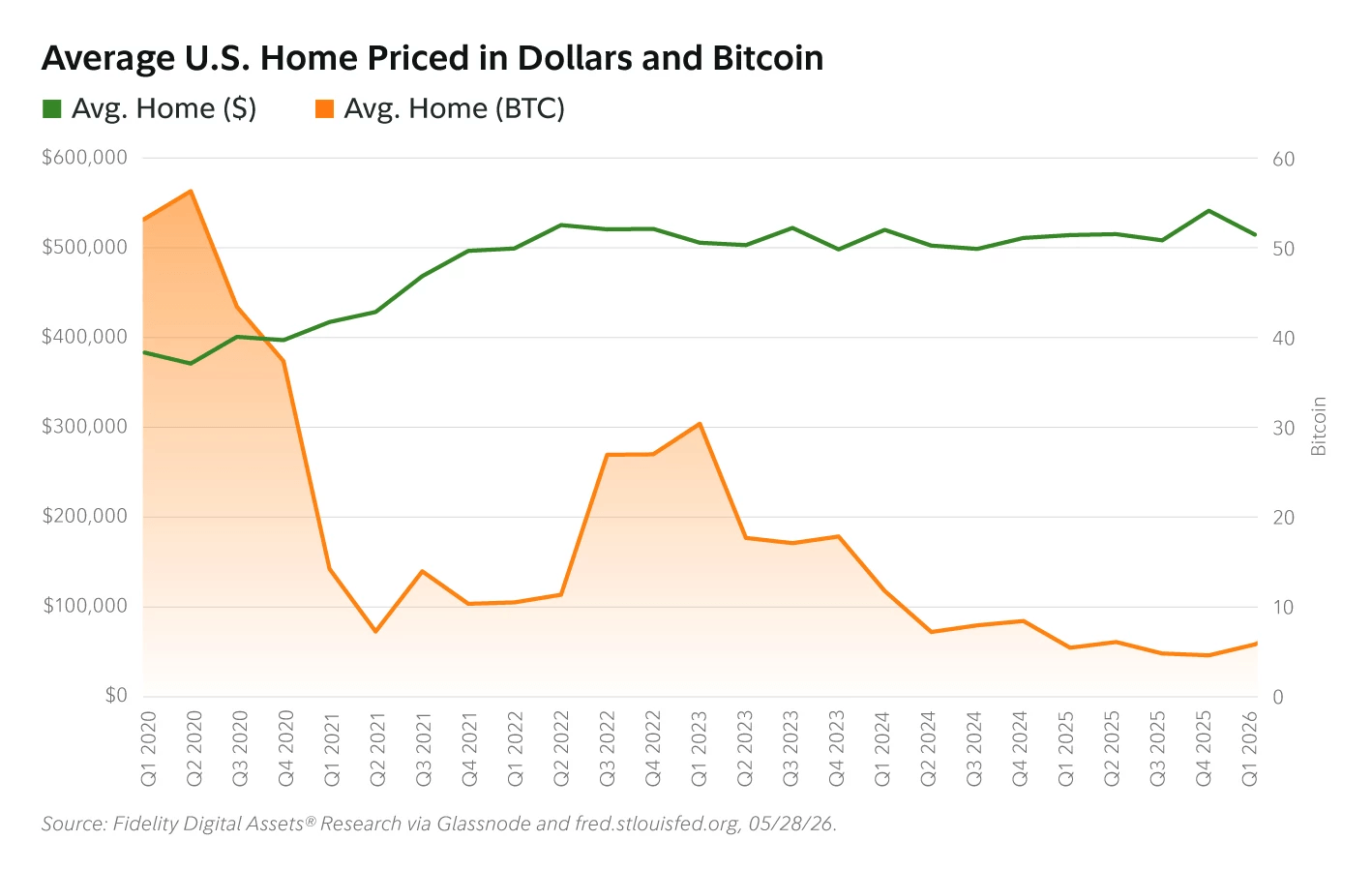
The comparison shows why denomination is more than a display choice. Two people can examine the same asset and see very different long-term price paths depending on the unit they use.
For bitcoin-focused users, this creates another way to think about purchasing power. Instead of asking only how many dollars an asset has gained, they can ask how many bitcoins are required to acquire it. The resulting chart may tell a very different story.
This approach is also becoming easier to apply within digital products. Interfaces can display subscriptions in sats, track performance against BTC rather than dollars, or show whether the bitcoin cost of a service has risen or fallen over time. The underlying product has not changed; the reference point has.
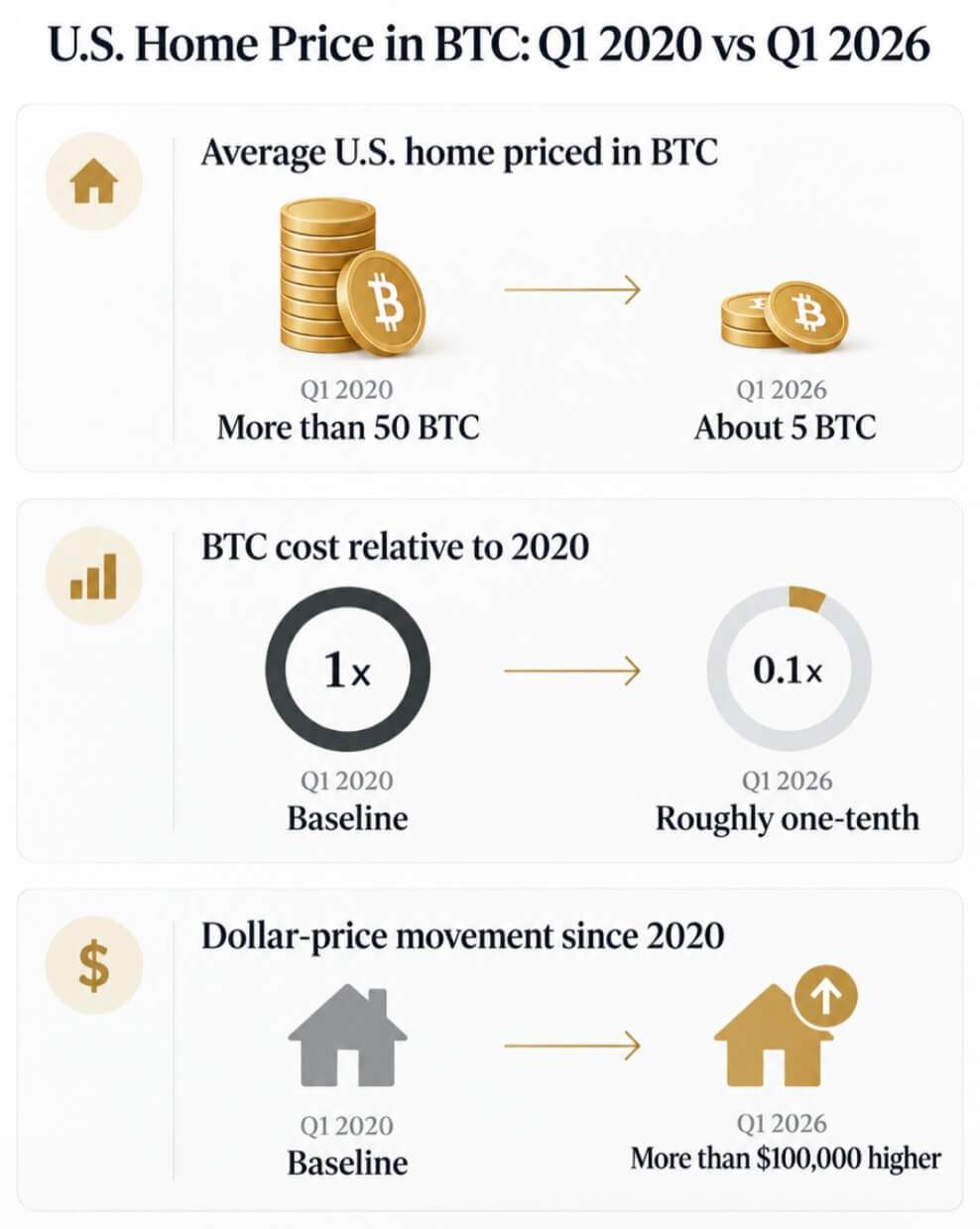
That distinction helps explain why BTC denomination is appearing as a product feature rather than simply an alternative payment button. It gives users a consistent benchmark for comparing value across time and across different bitcoin-native activities.
A Unit of Account Starts Becoming Useful Before It Becomes Universal
Academic research is increasingly examining this shift from bitcoin as an asset to bitcoin as a reference unit. In a 2025 study on cryptocurrencies as monetary units of account, economist Nicolás Aguila wrote that cryptocurrencies can “create a unit of account (BTC) to describe a novel monetary instrument.”
That idea does not require every shop, salary, or asset to be priced in BTC. A unit can become useful within particular digital environments first. Products with users who already hold bitcoin have an obvious reason to experiment with that model: denominating an activity in the same asset used for settlement removes an extra mental and technical conversion step.
From monetary theory to actual payment activity
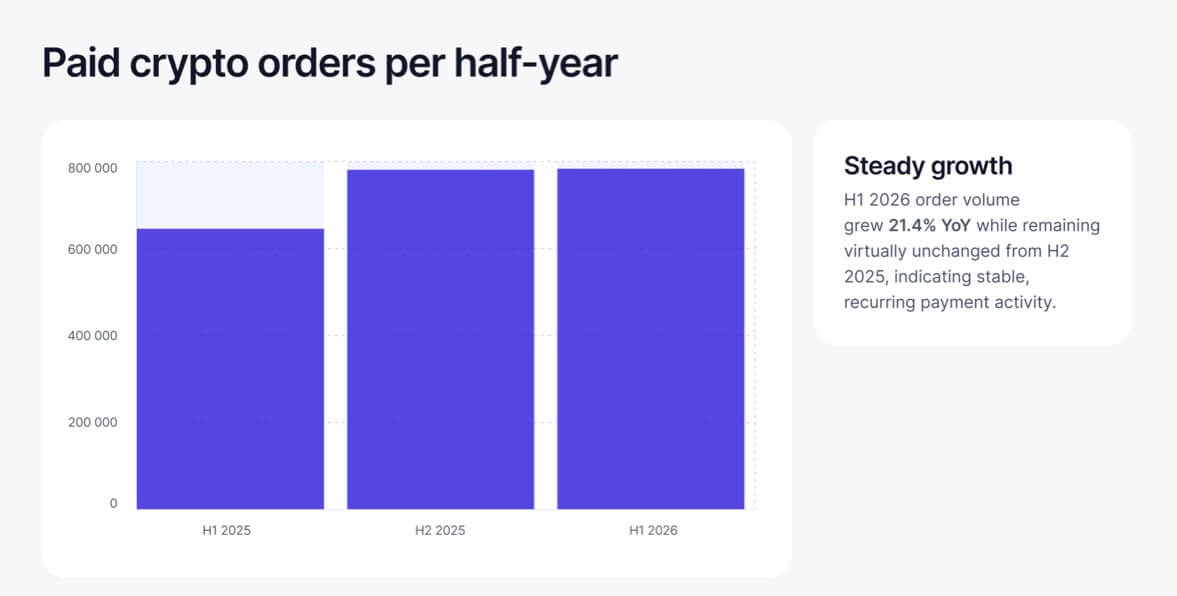
Payment data suggests that the transaction layer needed for these experiences is already seeing meaningful use. One large payment-processing dataset recorded 782,403 paid crypto orders during the first half of 2026, a 21.4% increase from the first half of 2025. Bitcoin represented 21% of those payments, while the Lightning Network handled 9.6% of BTC payments in the dataset.
Bitcoin can become a measuring stick one product at a time
The broader change may therefore happen product by product. Games, digital services, subscriptions, rewards, marketplaces, and financial interfaces can each create small BTC-denominated economies of their own. As users encounter more of them, thinking directly in bitcoin becomes a practical habit rather than an abstract monetary idea.
Bitcoin does not need to stop being quoted in dollars for this transition to matter. The more important development is that BTC is increasingly capable of becoming the measuring stick inside products built around it.