





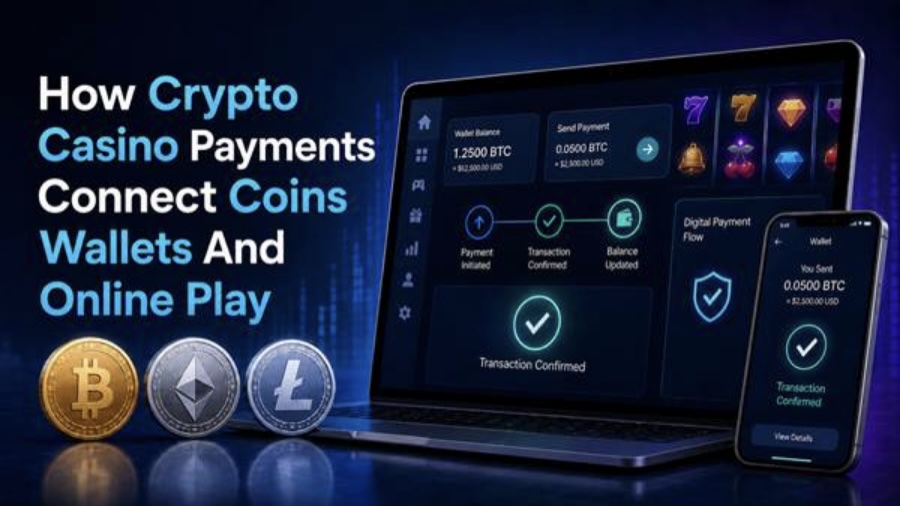
Crypto becomes easier to understand when it moves from chart talk into daily use. A wallet address, a coin balance, and a confirmation screen feel abstract until they support a recognizable online activity. Crypto casino games are useful because they show digital money working as payment infrastructure beyond market talk.
A 2024 open-access Heliyon study on cryptocurrency users found that people evaluate crypto as a payment method through practical attitudes such as usefulness, ease of use, and payment context. That gives casino gaming a clearer role. It is one online setting where users can see a coin move from wallet logic into a finished digital experience.
Where Crypto Payments Become Practical
A strong example of that payment layer is bovada.lv, an online platform that presents sports, casino, live dealer, poker, and horse racing options alongside multiple payment choices, including crypto. The practical value here is not that crypto changes the mechanics of a slot, card game, or sports market. It is that crypto becomes part of the access path around those formats: choosing a supported coin, sending funds from a wallet, seeing an account balance update, and then exploring digital entertainment through one account setting.
That makes Bovada a useful reference point for understanding crypto casino games as a payment use case, rather than a loose trend phrase. It connects familiar crypto actions with a consumer-facing environment where Bitcoin, Ethereum, Litecoin, Tether, Bitcoin Cash, cards, casino games, poker, and sports can appear in the same payment conversation. For headline-first crypto readers, that concrete context makes the technology easier to understand in everyday practice.
Once the payment layer is clear, the games themselves become easier to read. This short roundup of crypto casino games discusses themed slots such as Cai Fu Dai Panda, Yin Yang Twins, Phở Sho, Da Hong Bao, and Nine Tailed Fortune while also referencing Bitcoin, Ethereum, and Litecoin. Read as a descriptive sample, it shows how crypto payment language can sit beside familiar common slot details: reels, rows, paylines, wilds, scatters, free spins, and feature rounds.
The Payment Use Case Hiding in Plain Sight

Crypto casino games are often described through game variety, but the more interesting lesson is payment behavior. The user journey is simple enough to follow: a coin is selected, a wallet action happens, the platform reflects the payment, and the user moves into an online activity. That makes the concept more concrete than a discussion about blockchains in isolation.
| Payment Moment | What the reader learns | Why it matters |
| Coin choice | Different platforms support different assets | Crypto use depends on acceptance |
| Wallet transfer | The payment starts outside the platform | The wallet remains central |
| Confirmation | The user waits for the transaction to register | Payment clarity shapes confidence |
| Account balance | Digital value becomes usable on-site | Crypto moves from asset to function |
This table matters because it separates the crypto payment experience from game content. A slot theme explains the entertainment layer. A wallet transfer explains the payment layer. A user who can keep those ideas separate will understand the article topic more clearly.
Why Entertainment Settings Make Crypto Easier to Grasp
Many crypto explainers start with infrastructure: ledgers, blocks, addresses, and network fees. Those details matter, but they do not always explain why a normal user would choose crypto for a specific online activity. Entertainment settings give the topic shape. The user is using a supported payment method for a defined purpose inside a recognizable account experience.
That is where crypto casino games become a strong example for the wider digital payment conversation. They show that adoption is about whether a coin is accepted, whether the process feels understandable, and whether the user can connect the action to a clear outcome. In that sense, the category sits close to other online services that use digital wallets, account balances, and fast-moving payment expectations.
There is also a language lesson here. Crypto readers may know Bitcoin or Ethereum, but still miss what casino game descriptions mean. Casino readers may know slots or poker, but not understand why a coin option changes the payment flow. A strong article has to bring those audiences together without pretending they are the same. Crypto explains the movement of value. Casino games explain the activity that follows. The useful insight sits where those two layers meet.
The Bigger Lesson for Digital Payments
Crypto casino games are not a complete map of cryptocurrency adoption, but they are a vivid use case. They show how payment methods become real when they appear inside actual consumer journeys. That is why the topic deserves more than a generic list of games or coins. It helps readers understand the shift from holding crypto to using crypto.
The best way to frame that shift is with payment confidence. Users tend to trust payment methods when the process feels understandable, the environment feels coherent, and the next step is clear. A separate open-access Frontiers article on cryptocurrency payment trust reinforces that adoption depends on more than technology alone, including confidence in the payment process and the setting where the transaction happens.